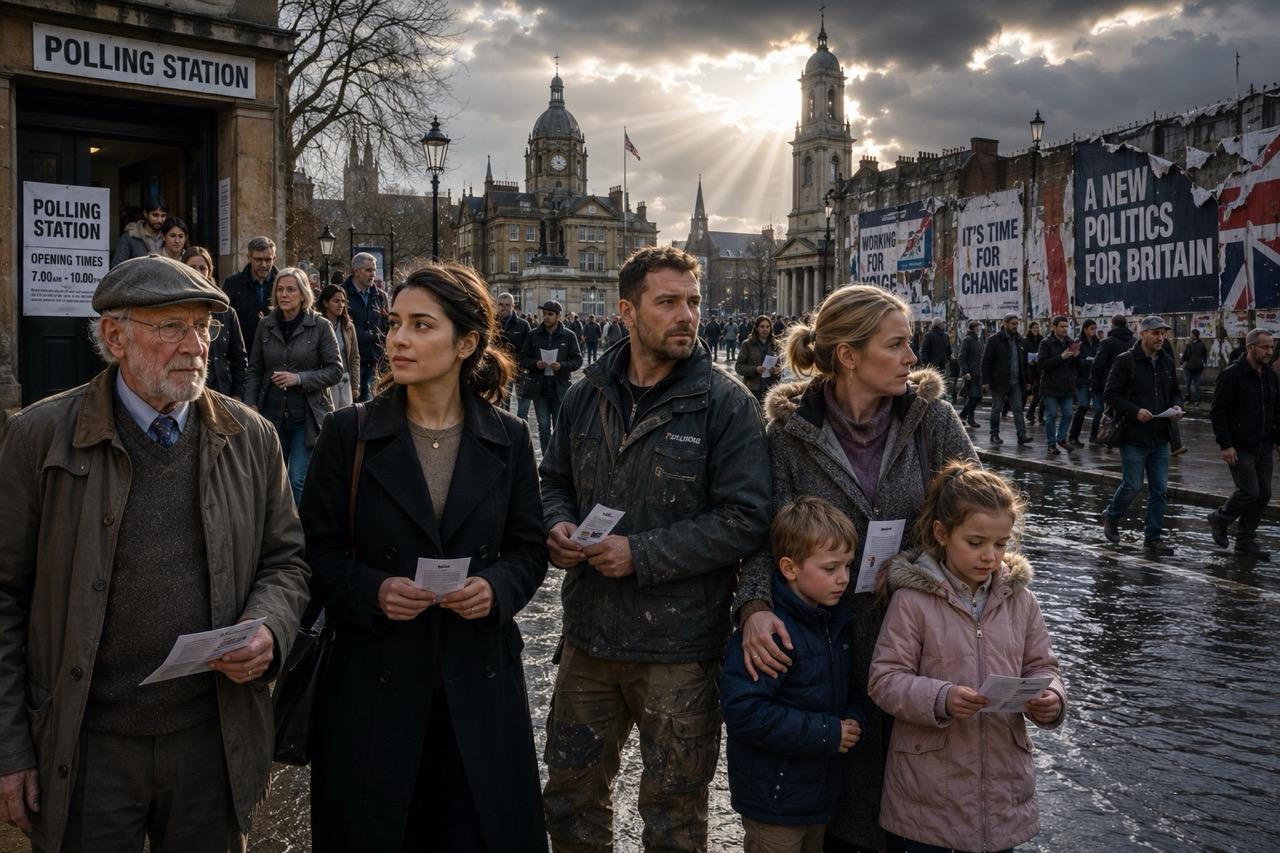
British Politics in Transition
Polling stations were set up across the UK for local elections in readiness for the dissatisfaction many felt towards the Labour Party. What had been a two-party race was now being challenged by other parties that were gaining interest and votes from voters who had lost all allegiance and hope in the presiding government. Consequently, the 2026 local elections have produced one of the most significant shifts in British politics in decades. The clearest winner was Reform UK, which moved from being a protest party to a serious electoral force. Under the leadership of Nigel Farage, Reform won more than 1,400 council seats and took control of several major authorities, including Essex, Sunderland and South Tyneside.
The biggest losers were the two traditional governing parties. The Labour Party suffered heavy losses across England, Wales and Scotland. Particularly symbolic was the loss of control of Birmingham City Council after 14 years, reflecting public frustration over local service failures and the council’s financial crisis. Labour also lost its long-standing dominance in Wales, where Plaid Cymru emerged as the largest party, and Reform surged into second place.
The Conservative Party also continued to decline, although it retained some pockets of strength, including Westminster. Meanwhile, the Green Party of England and Wales and Liberal Democrats made meaningful gains, confirming that British politics is becoming increasingly fragmented.
First, voter dissatisfaction with mainstream politics is profound. Many electors feel that neither Labour nor the Conservatives are addressing concerns about immigration, the cost of living, public services and national identity. Second, Britain is moving away from the traditional two-party system toward a more volatile, multi-party landscape. Third, Reform UK is now a genuine contender at the next general election.
In short, these elections signal a political realignment. The old certainties are weakening, and the electorate is demanding substantial change rather than minor adjustments. Interestingly, we can link this to Amos’s states, regarding justice, complacency and judgment in Amos 5:24 “Let justice roll down like waters and righteousness like an ever-flowing stream.”
This passage from the prophet Amos reminds us that the pursuit of justice and righteousness is fundamental to a healthy society. As voters across Britain engage in the democratic process and demand accountability from their leaders, they are exercising their responsibility to seek equitable governance and transparent leadership. The shift in electoral patterns reflects a deep desire among citizens for their voices to be heard and their legitimate concerns addressed. Aristotle wrote, “Democracy arises from the notion that those who are equal in any respect are equal in all respects; because men are equally free, they claim to be absolutely equal.”
This quotation captures the essence of the 2026 elections: citizens reassessing the political landscape and exercising their democratic rights. The fragmentation of the political system, while challenging, demonstrates a vibrant electorate willing to push back against the status quo in pursuit of better governance and representation.
Let us pray for Christ to lead and fight against the spirit of division, hostility, and indifference during these challenging times.